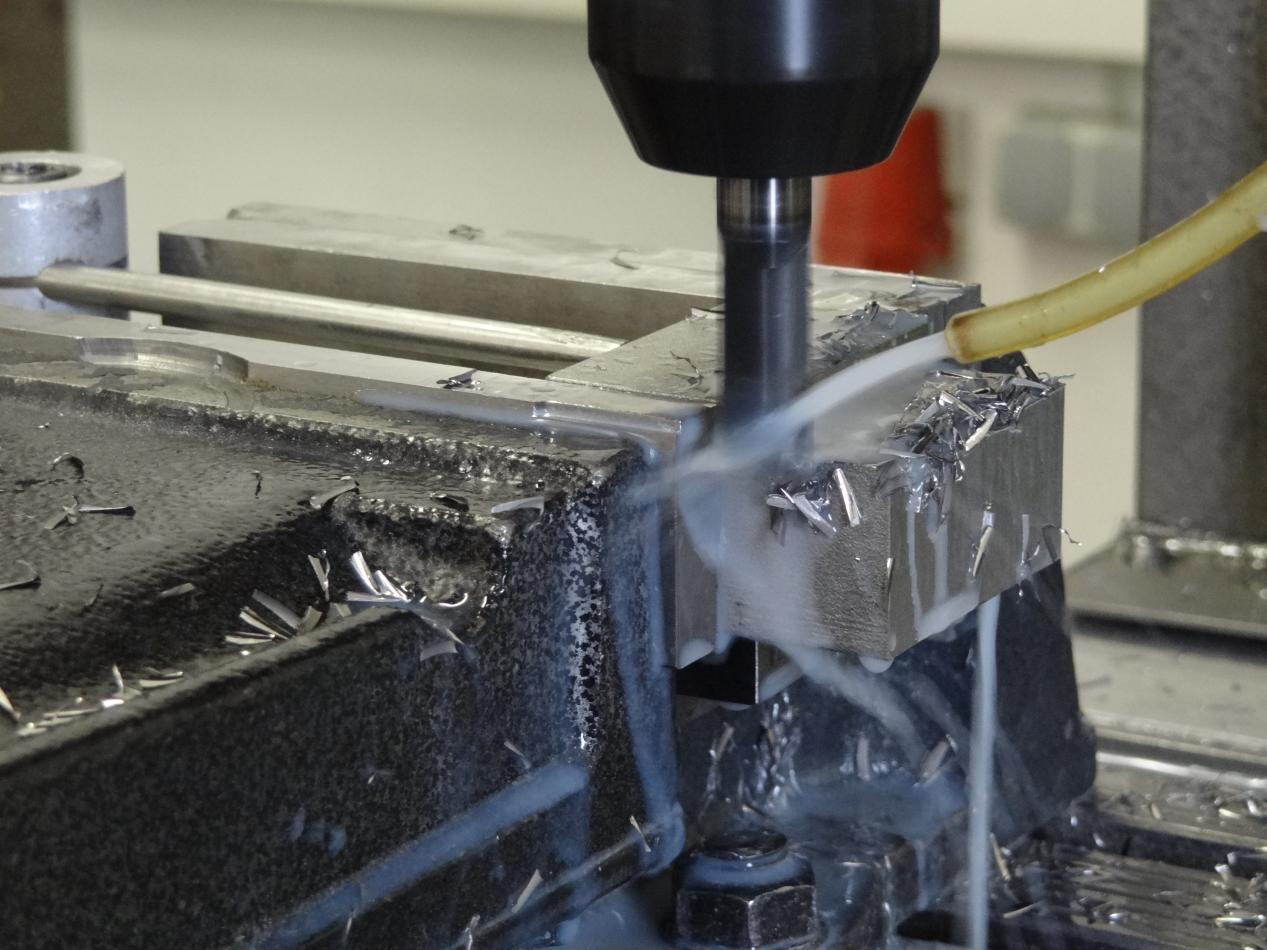
Within the sophisticated system of modern industry, machining occupies a pivotal position, serving as the essential cornerstone upon which the industrial edifice is built. Through a series of complex, high-precision operations, machining transforms various metallic or non-metallic raw materials into components that meet stringent engineering requirements. Providing indispensable foundational support for numerous industries, it is truly the lifeblood of the industrial sector.
Machining encompasses a variety of processes, including cutting, grinding, drilling, and boring. Among these, cutting is one of the most common methods, involving the removal of material through the relative motion between a cutting tool and the workpiece, according to predetermined geometric shapes and dimensions. This process requires precise control over numerous technical parameters, such as cutting speed, feed rate, and depth of cut. The selection of these parameters directly influences the machining quality, surface roughness, and tool life.
In the aerospace industry, for example, the precision and quality requirements for components are exceptionally demanding. Turbine blades in aircraft engines must operate reliably under extreme conditions of high temperature and high pressure. Consequently, the machining accuracy of these blades must be controlled at the micron or even sub-micron level. During manufacturing, machining engineers must leverage advanced five-axis simultaneous machining technology, tailored to the complex geometries and specific material properties of the blades. This allows the cutting tool to accurately remove material across multiple dimensions, achieving the high-precision forming of the blade’s airfoil surfaces. Simultaneously, ultra-precision measurement equipment, such as laser interferometers and coordinate measuring machines (CMMs), is used to comprehensively inspect the machined blades, ensuring that all dimensional and geometrical tolerances strictly comply with design specifications.
In automotive manufacturing, machining also plays a critical role. The engine cylinder block, a core component of an automobile, features a complex internal structure with cylinder bores, oil galleries, and water jackets. The machining process demands high-precision boring and milling techniques to guarantee the cylindricity, roundness, and positional accuracy of the cylinder bores and their associated hole systems. Advanced CNC machining centers enable the integration of multiple processes, performing milling, drilling, tapping, and other operations on various faces in a single setup. This significantly reduces fixturing errors, enhances machining efficiency, and improves product quality stability.
The advancement of the machining industry is inseparable from continuous technological innovation. With the widespread application of new materials, such as high-strength alloys and composites, traditional machining processes face considerable challenges. To adapt to the characteristics of these new materials, innovations like super-hard tool materials, high-speed machining technology, and minimal quantity lubrication (MQL) cooling techniques have emerged. The application of these innovative technologies not only improves material removal rates but also significantly enhances the machined surface quality of workpieces while reducing thermal deformation and residual stresses during processing.
Furthermore, the deep integration of digital manufacturing technologies is propelling the development of intelligent machining. The widespread use of Computer-Aided Design (CAD) and Computer-Aided Manufacturing (CAM) software enables a seamless digital workflow, from product design to machining programming. Through virtual simulation technology, machining engineers can verify and optimize the entire process virtually before actual production begins, allowing them to proactively identify and resolve potential issues, effectively reducing scrap rates and shortening production cycles.
Machining professionals, driven by their profound understanding of specialized knowledge and an unwavering pursuit of perfection in process details, demonstrate an exceptional spirit of craftsmanship at the micron level. By strictly controlling every stage of the machining process and continuously exploring innovative methods and technologies, they provide a robust and reliable foundation of precision components for industrial manufacturing. In doing so, they forge the unyielding backbone of modern industry, powerfully propelling global manufacturing toward a future defined by higher precision, greater efficiency, and intelligent automation.