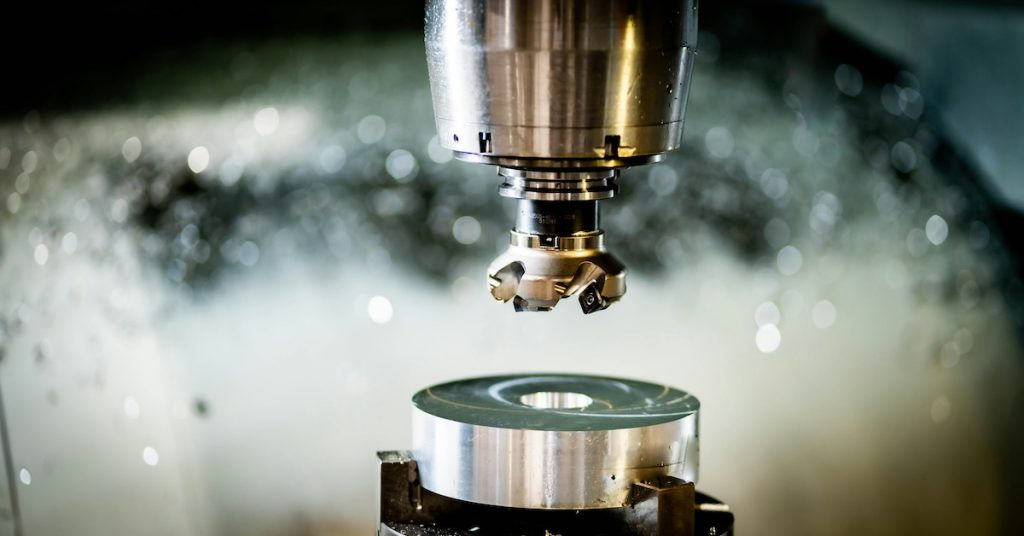
In the manufacturing industry chain, machining processes serve as the critical bridge connecting raw materials to finished products. Through a series of precisely controlled processing methods, these techniques transform raw blanks—such as metals and plastics—into components with specific shapes, dimensional accuracy, and surface quality, underpinning the development of aerospace, automotive manufacturing, precision instrumentation, and countless other sectors. The structural characteristics and performance requirements of different parts determine the choice of process. Below, we dissect the core logic and application scenarios of eight mainstream machining processes.
- Turning: The “Shaping Master” of Cylindrical Components
Process Core: With the workpiece rotating as the primary motion, the cutting tool moves along or radially to the workpiece axis to perform cutting. The core objective is to machine rotational bodies such as cylinders and cones. As one of the most fundamental machining processes, the precision control of turning directly affects the assembly compatibility of shaft and sleeve components.
Key Applications: From critical transmission components like automotive gearbox main shafts and motor shafts, to everyday items like bolts and nuts—all rely on turning for their formation. Based on the specific area being machined, turning can be subdivided into four categories: external turning (machining the outer surfaces of shafts), internal turning (machining the inner bores of sleeves), facing (machining the end faces of parts), and thread turning (machining internal and external threads).
Technical Essentials: The selection of tool materials (high-speed steel is suitable for low-speed finishing, while carbide is ideal for high-speed cutting), along with the matching of cutting speed and feed rate, are the core factors controlling surface roughness and machining efficiency.
- Milling: The “Sculpting Craftsman” of Complex Contours
Process Core: Unlike turning, where the workpiece rotates, milling uses the high-speed rotation of the cutting tool as the primary motion. By controlling the relative trajectory between the tool and the workpiece, milling can machine complex structures such as flat surfaces, slots, gears, and curved surfaces, offering far greater flexibility than turning.
Typical Scenarios: The machining of flat surfaces on automotive engine blocks, gear tooth profiles in gearboxes, and cavity contours in molds all rely on milling. Common classifications include face milling (producing flat surfaces), end milling (machining deep slots and steps), peripheral milling (contour finishing), and profile milling (machining complex curves).
Technical Advantages: CNC milling technology enables multi-axis linkage through programming, accurately reproducing complex design blueprints. It is particularly well-suited for small-to-medium batch production of high-mix, precision components.
- Drilling: The “Entry-Level Solution” for Hole Machining
Process Core: Using a rotating drill bit with helical cutting edges to cut into the workpiece, forming through-holes or blind holes. Drilling is the most widely used foundational process for hole machining in manufacturing, involved in everything from simple assembly holes to locating holes.
Classifications and Applications:
- Conventional drillingis suitable for ordinary holes of smaller diameters.
- Center drillingserves as a preparatory operation, using a pre-drilled small hole to ensure the positioning accuracy of subsequent larger holes.
- Deep-hole drilling(where the hole depth-to-diameter ratio exceeds 10) requires a dedicated cooling system to prevent drill bit overheating, commonly used for engine oil gallery holes.
- Multi-spindle drillingemploys multiple drill bits operating simultaneously to improve machining efficiency for multi-hole parts, such as in flange processing.
- Grinding: The “Polishing Master” for High-Precision Surfaces
Process Core: Utilizing abrasive grains on the surface of grinding tools (such as grinding wheels and belts) as cutting units, grinding performs micro-cutting on the workpiece surface. It can achieve dimensional accuracy above IT5 grade and surface roughness below Ra 0.025μm, making it the “final finishing process” for precision components.
Core Applications: Mirror-finish machining of mold cavities, grinding of inner and outer rings of precision bearings, and finishing of cutting tool edges. Classifications include surface grinding (machine tool guideway machining), cylindrical grinding (precision shaft machining), internal grinding (bearing bore machining), and profile grinding (complex curved surfaces of molds).
Process Characteristics: The grinding temperature must be strictly controlled during processing to prevent thermal deformation that could compromise accuracy. A coolant circulation system is typically required.
- Boring: The “Specialized Solution” for Large-Diameter Precision Holes
Process Core: Targeting existing pre-drilled or cast holes, boring uses a rotating boring tool to enlarge and refine the hole. The primary goal is to improve dimensional accuracy, roundness, and coaxiality, addressing the precision deficiencies of drilling in large-diameter hole applications.
Key Scenarios: Machining of cylinder bores in automotive engine blocks, machine tool spindle bores, and through-holes in large valve bodies. Based on the level of automation, boring is divided into manual boring (small-batch, simple machining) and CNC boring (high-volume, high-precision machining). CNC boring, in particular, can achieve multi-station continuous machining through programming, significantly boosting efficiency.
Difference from Drilling: Drilling creates holes “from nothing,” while boring refines holes “from rough to precise.” Boring is especially suitable for precision holes with diameters larger than 50mm.
- Planing: The “Efficient Machiner” of Large Flat Surfaces
Process Core: Using the linear reciprocating motion of a planing tool to cut the workpiece, planing achieves flat surface machining on large workpieces at low cost. It is particularly well-suited for single-part and small-batch production scenarios.
Typical Applications: Machining of flat surfaces on machine tool beds, large bases, guideways, and similar components. Planing ensures the flatness of workpiece surfaces, providing a foundation for subsequent assembly. The process is divided into two stages: rough planing (heavy cutting for rapid material removal) and finish planing (light cutting to improve surface quality).
Process Limitations: Due to the nature of reciprocating motion, planing is less efficient than milling and is better suited for machining narrow, elongated flat surfaces where the length exceeds the width.
- Slotting: The “Precision Engraver” of Internal Complex Contours
Process Core: Similar to “vertical planing,” slotting uses the vertical reciprocating motion of a slotting tool to cut complex contours on internal surfaces or end faces of workpieces. It can machine features such as grooves, keyways, and splines in a single operation.
Application Advantages: Slotting is ideal for machining internal structures that are difficult for conventional milling to reach, such as keyways in gearboxes and special-shaped grooves in molds. Based on the workpiece, slotting can be classified as surface slotting, contour slotting, groove slotting, and hole slotting. Machining accuracy can reach IT7 grade, with surface roughness of Ra 1.6μm.
- Electrical Discharge Machining (EDM): The “Game Changer” for Difficult-to-Machine Materials
Process Core: EDM utilizes pulsed electrical discharges between an electrode and the workpiece to generate high temperatures that melt and erode the conductive material. As a “non-contact machining” method, it completely breaks the reliance on tool hardness inherent in traditional mechanical processing.
Core Value: EDM is specifically used for machining difficult-to-cut materials such as cemented carbides, titanium alloys, and die steels, as well as structures that are challenging for conventional processes—such as micro-cavities in mobile phone molds, complex turbine blades in aerospace engines, and precision holes in medical devices.
Unique Advantages:
- Machining accuracy reaches the sub-micron level, enabling precise replication of complex curved surfaces.
- The absence of mechanical cutting forces eliminates workpiece deformation.
- Electrodes can be reused, making the process suitable for batch production.
The Core Logic of Process Selection
There is no inherent “superiority” among these eight processes—only “suitability” for specific applications. When selecting a process, three major factors must be considered comprehensively:
Part Characteristics: Material hardness, structural complexity, and dimensional accuracy requirements.
Production Demands: Batch size and delivery timelines.
Cost Control: Equipment investment and machining efficiency.
For example:
High-volume cylindrical parts → prioritize turning.
Precision mold cavities → prioritize grinding + EDM.
Large flat surfaces → prioritize planing or milling.
With the advancement of smart manufacturing, the combined application of multiple processes—such as turn-mill compound machining and milling + grinding finishing—has become a mainstream trend for improving production efficiency.